Check Your Doctors and Drugs Before Medicare Open Enrollment Ends on December 7

By Rana — Editor, Elite Era Trends
Medicare open enrollment is open right now, and it closes on Monday, December 7, 2026. This is the one time of year when most people with Medicare can change their health and drug coverage for 2027. But the most expensive mistake you can make in this window is not picking the “wrong” premium. It is switching to a plan that quietly stops covering your doctor, your hospital, or a prescription you take every day.
Plans are allowed to change their doctor networks and their lists of covered drugs every year — even if you change nothing. So whether you plan to switch or stay put, the smartest move before December 7 is a simple check: confirm that your doctors and your drugs are still covered for 2027. This guide walks you through that check, step by step, in plain language.
Contents
- Why this check matters more than the premium
- The deadlines you need to know
- Step 1: Read your Annual Notice of Change
- Step 2: Make your two lists — doctors and drugs
- Step 3: Run the check in Medicare’s Plan Finder
- Step 4: Confirm your doctors directly
- Step 5: Check your drugs, tiers and pharmacy
- Step 6: Compare total yearly cost, then decide
- What happens if you miss December 7
- Frequently asked questions
- Sources
Why this check matters more than the premium
A plan with a $0 monthly premium can still be the most expensive plan for you if your main specialist is out of network or your key prescription moves to a higher cost tier. Medicare itself gives the same advice: before you join or switch, check whether the plan covers your prescriptions, ask your doctors and pharmacies whether they are in the plan’s network, and review the estimate of your total yearly costs — not just the monthly price (see Medicare’s official guidance in the Sources list below).
There are three common ways people get caught out in January:
- A doctor leaves the network. Medicare Advantage plans contract with doctors and hospitals, and those contracts change. A doctor who was in-network in 2026 may not be in 2027.
- A drug moves or drops off the list. Every plan has a list of covered drugs, called a formulary. A drug can move to a more expensive tier, gain a restriction such as prior authorization, or stop being covered.
- The pharmacy gets pricier. The same drug can cost different amounts at different pharmacies under the same plan, and a pharmacy’s preferred status can change year to year.
All three problems are findable in November. In January, they are bills.
The deadlines you need to know
According to Medicare.gov, the fall Open Enrollment Period runs from October 15 to December 7. During this window you can:
- Join, drop, or switch a Medicare Advantage plan, with or without drug coverage
- Switch from Original Medicare to a Medicare Advantage plan, or the other way around
- Join, drop, or switch a Medicare drug plan (Part D) if you have Original Medicare
Any change you make starts on January 1, 2027 — and the plan must receive your request by December 7. If you are happy with your current coverage and it is still offered, you do not have to do anything: your plan renews automatically, with its 2027 changes built in. That last point is exactly why the doctor-and-drug check matters even for people who never switch. “No action needed” does not mean “nothing changed.”
See also: Medicare Open Enrollment 2027 dates and checklist.
Step 1: Read your Annual Notice of Change
If you are in a Medicare Advantage plan or a Part D drug plan, your plan was required to send you an Annual Notice of Change in the fall, usually arriving around September. It is not junk mail. It lists what changes on January 1: premiums, copays, which drugs are covered and at what tier, and changes to the doctor and pharmacy networks.
Read it with a pen in hand and three questions in mind:
- Is every prescription I take still listed, and did any drug move to a higher tier?
- Are my regular doctors, specialists and hospital still in the network?
- Did the premium, deductible or copays change enough to matter?
If you cannot find your notice, call your plan and ask for a copy, or check the plan’s website. This document is your starting point, because it tells you what to double-check in the Plan Finder.
Step 2: Make your two lists — doctors and drugs
Before you open any comparison tool, write down two lists. This takes ten minutes and makes every later step faster and more accurate.
Your doctor list: your primary care doctor, every specialist you see, the hospital you would want to use, and any clinic or therapy provider you visit regularly. Write the full name and the practice name — networks list both.
Your drug list: every prescription you take regularly, with the exact name, strength (for example, 10 mg) and form (tablet, capsule, liquid). Medicare specifically advises adding all the prescription drugs you take regularly when you compare plans, because that is what produces an accurate monthly and yearly cost estimate. A drug entered at the wrong strength can give you a wrong price, so copy the details straight off the bottle or your pharmacy printout.
Also note your preferred pharmacy. If you spend part of the year in another state, note that too — Medicare suggests checking whether a plan will cover you where you live for part of the year, and most Medicare Advantage networks are local.
Step 3: Run the check in Medicare’s Plan Finder
The official, free comparison tool is the Medicare Plan Finder at Medicare.gov/plan-compare. You can search with your ZIP code without an account, but logging in to your Medicare account saves your drug and doctor lists so you do not have to retype them next year.
Inside the tool:
- Enter your ZIP code and choose the type of plan you want to compare — Medicare Advantage plans, Part D drug plans, or both views.
- Add every drug from your list, with the correct strength and form.
- Add your pharmacies — include the one you use now, and maybe one alternative nearby.
- Add your doctors, so the tool can show which plans include them.
The Plan Finder will list the plans available where you live and estimate your total yearly cost for each one — premiums plus what you would pay for your specific drugs. Sort by total yearly cost rather than by premium. Then click into the two or three best-looking plans and look at the detail pages, not just the summary prices.
Step 4: Confirm your doctors directly
Here is the step too many people skip. The Plan Finder is a good guide, but network information can lag behind real life, and Medicare’s own advice is to ask your doctors and pharmacies directly whether they are in network with the plan you are considering.
So, before you enroll, make two quick calls:
- Call each doctor’s office and ask: “Will you be in this plan’s network in 2027, and are you accepting patients with this plan?” Billing staff answer this question every day in the fall; it takes two minutes.
- Check the hospital, not just the doctors. A specialist can be in-network while the hospital where they operate is not, which can produce a very large bill.
If a key doctor is out of network in an HMO plan, you would generally pay the full cost yourself for routine care from that doctor. In a PPO plan, out-of-network care is usually covered at a higher cost. Either way, it is far better to learn this in November than at the appointment desk in February.
For how networks are changing next year, see: Medicare Advantage changes for 2027.
Step 5: Check your drugs, tiers and pharmacy
For each plan on your shortlist, go drug by drug and confirm four things:
- Is the drug covered at all? If a drug is not on the plan’s list, you would normally pay the full price unless the plan grants an exception.
- What tier is it on? Lower tiers usually mean lower copays; higher tiers often mean coinsurance — a percentage of the drug’s price — which can be much more.
- Are there restrictions? Watch for prior authorization (the plan must approve it first), step therapy (you must try a cheaper drug first), or quantity limits.
- What does your pharmacy charge under this plan? The Plan Finder shows estimated drug costs at the pharmacies you selected. Sometimes changing pharmacy saves more than changing plans.
One more protection worth knowing for 2027: Part D has a yearly cap on what you pay out of pocket for covered drugs. For 2027, that cap is $2,400 — after you reach it, you pay nothing more for covered Part D drugs for the rest of the year (see our guide to 2027 Part D costs, and Medicare’s Part D cost pages in the Sources). The cap does not fix a drug being dropped from the list, though, which is why the drug-by-drug check still matters.
Also see: Medicare Part D premium increase 2027: should you switch plans?
Step 6: Compare total yearly cost, then decide
Now put it together. For your current plan and each alternative, compare:
- Total estimated yearly cost (premium × 12, plus deductible, plus your expected copays and drug costs)
- Whether all your doctors are in network
- Whether all your drugs are covered, and at what tiers
- The plan’s out-of-pocket maximum for medical care (for Medicare Advantage plans)
- The plan’s star rating, shown in the Plan Finder, as a general quality signal
If your current plan still covers your doctors and drugs at a reasonable total cost, staying is a perfectly good decision — open enrollment does not require a change. If you do switch, you can enroll right inside the Plan Finder by selecting “Enroll,” by contacting the plan directly, or by calling 1-800-MEDICARE (1-800-633-4227; TTY 1-877-486-2048). Joining a new Medicare Advantage or drug plan automatically ends your old one of the same type, so you do not need to cancel anything separately. Keep the enrollment confirmation and watch for your new plan card before January 1.
Free, one-to-one help is also available from your State Health Insurance Assistance Program (SHIP). SHIP counselors are trained volunteers and staff who do not sell plans or earn commissions; they can sit with you and run these same comparisons. You can find your local program through Medicare’s help pages or by calling 1-800-MEDICARE and asking for SHIP.
What happens if you miss December 7
If the deadline passes, most people keep their current coverage for 2027 and wait for next fall. But there are two important exceptions:
- Medicare Advantage Open Enrollment Period: if you are already in a Medicare Advantage plan, you get a second window from January 1 to March 31, 2027. In that window you can switch to a different Medicare Advantage plan once, or drop your plan, return to Original Medicare, and join a separate drug plan.
- Special Enrollment Periods: certain life events — such as moving, losing other coverage, or your plan ending — can open a personal window to change plans at other times of year.
If you are on Original Medicare with a Part D plan and you miss December 7, there is generally no January-to-March second chance for the drug plan itself, which is another reason to do the drug check now.
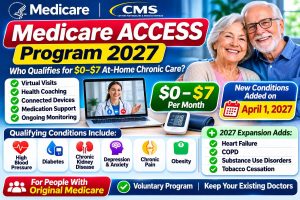
If you are on Original Medicare, see also: Medicare ACCESS Program 2027 explained.
Frequently asked questions
Do I have to change my Medicare plan during open enrollment?
No. If your plan is still offered and you are happy with it, it renews automatically. But its costs, drug list and doctor network may change for 2027, so checking the Annual Notice of Change and running the doctor-and-drug check is still worthwhile.
When does Medicare open enrollment end, and when does new coverage start?
Open enrollment ends December 7, 2026, and the plan must receive your enrollment request by that date. Coverage under the plan you chose starts January 1, 2027.
How do I check if my doctor accepts a Medicare Advantage plan for 2027?
Add your doctors in the Medicare Plan Finder at Medicare.gov/plan-compare to see which plans list them in network, then confirm directly with the doctor’s office, because network listings can be out of date. Medicare itself recommends asking your doctors and pharmacies whether they are in network with the plan.
What is the Part D out-of-pocket cap for 2027?
For 2027, your out-of-pocket spending on covered Part D drugs is capped at $2,400 for the year. Once you reach the cap, you pay nothing more for covered drugs that year. Drugs that are not on your plan’s list do not count toward the cap, so confirming your drugs are covered still matters. See: Medicare Part D 2027 costs: deductible and out-of-pocket cap.
Can I change my Medicare Advantage plan after December 7?
Yes, in one situation: people already in a Medicare Advantage plan can make one change during the Medicare Advantage Open Enrollment Period, January 1 to March 31, 2027 — switching to another Advantage plan, or returning to Original Medicare and joining a separate drug plan. Otherwise, changes outside the fall window usually require a Special Enrollment Period.
Sources
- Medicare.gov — Joining a health or drug plan (open enrollment dates, what you can change, Plan Finder guidance, phone numbers)
- Medicare.gov — Plan Finder / compare plans
- Medicare.gov — Part D costs (2027 deductible and out-of-pocket cap context)
This article is general information, not personal financial, medical or legal advice. Plan details vary by ZIP code and change yearly; confirm your own coverage at Medicare.gov or by calling 1-800-MEDICARE before making a change.